HSK 3.0 vs the Current HSK: Which Format Should You Prepare For?
 HSK 3.0 guide
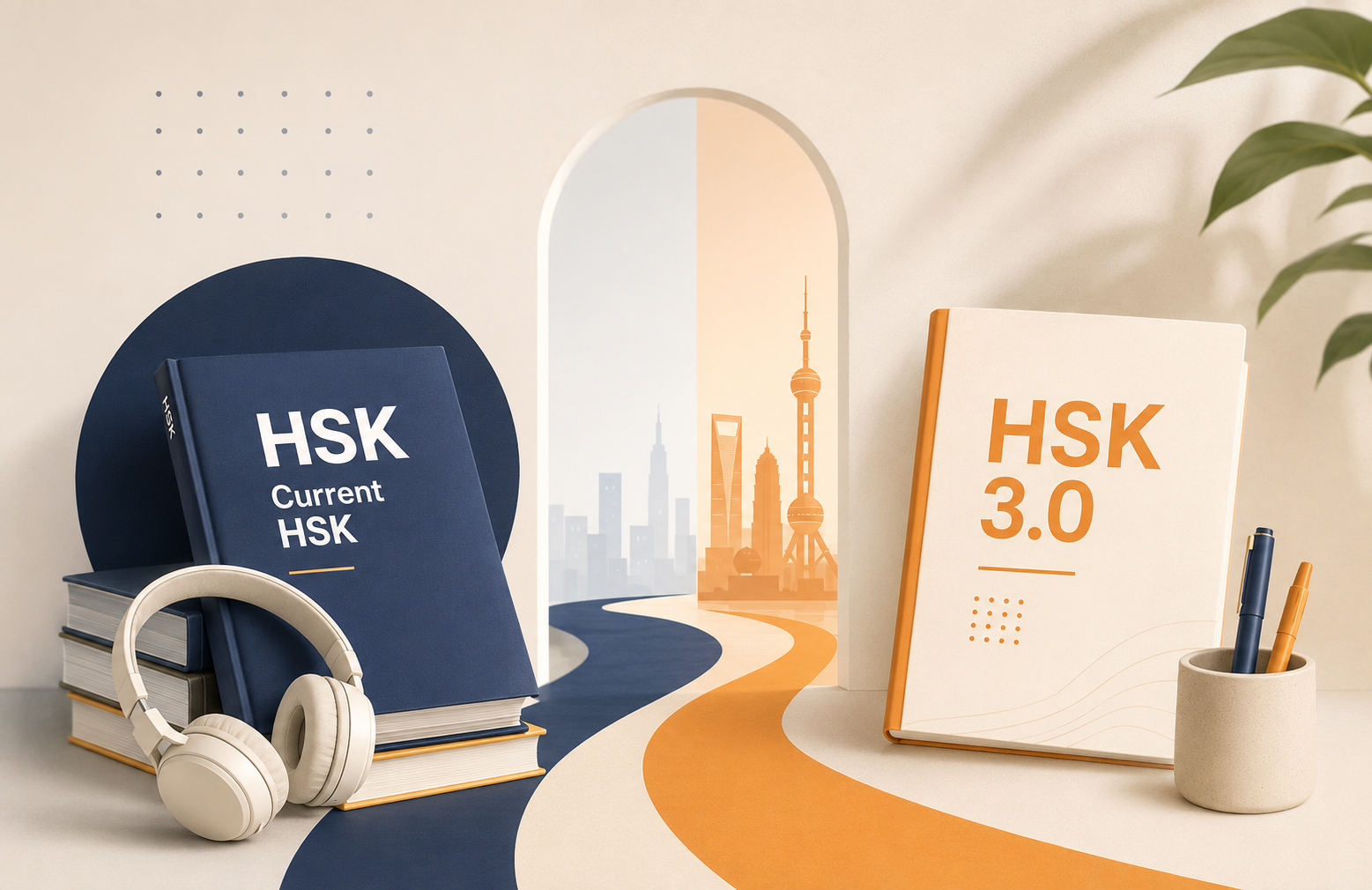
HSK 3.0 has introduced a new syllabus, revised vocabulary lists, new question formats, corresponding speaking tests and a new series of preparation books.
However, this does not mean that every HSK examination in 2026 uses the HSK 3.0 format.
Chinese Testing International stated that the regular HSK Levels 1–6 examination dates in 2026 continue to use the existing HSK format, commonly called HSK 2.0. HSK 3.0 is currently being introduced through specifically announced test sessions. A further HSK 3.0 session has been announced for 20 September 2026. The date when HSK 3.0 will fully replace the existing format has not yet been announced.
HSK 3.0 or HSK 2.0: The Quick Answer
You are registered for a regular 2026 HSK Levels 1–6 examination.
Your test centre has not specifically described the examination as HSK 3.0.
Your registration confirmation shows the regular HSK or HSKK examination.
Your test centre specifically confirms that you are taking an HSK 3.0 examination.
You are registered for the HSK 3.0 test on 20 September 2026.
You are preparing for a future HSK 3.0 examination rather than an upcoming regular HSK date.
What is the current HSK format?
The existing HSK Levels 1–6 system was introduced in its present form from 2009 and 2010. It is often called HSK 2.0, although many official registration pages simply call it HSK.
It has six independent written examination levels:
HSK Level 1
HSK Level 2
HSK Level 3
HSK Level 4
HSK Level 5
HSK Level 6
HSK Levels 1 and 2 test listening and reading. HSK Levels 3–6 test listening, reading and writing.
Speaking is assessed separately through HSKK:
HSKK Basic
HSKK Intermediate
HSKK Advanced
The current HSK vocabulary targets range from 150 words at Level 1 to 5,000 or more at Level 6.
What is HSK 3.0?
HSK 3.0 is the revised HSK system based on the Chinese Proficiency Grading Standards for International Chinese Language Education.
The standard was published by China’s Ministry of Education and the State Language Commission in 2021. It organises Chinese proficiency into three stages and nine levels:
| Stage | HSK levels |
|---|---|
| Elementary | Levels 1–3 |
| Intermediate | Levels 4–6 |
| Advanced | Levels 7–9 |
The standard describes ability using four language elements:
Vocabulary
Chinese characters
Grammar
Syllables
It also describes five language skills:
Listening
Speaking
Reading
Writing
Translation
This does not mean that translation appears in every HSK 3.0 examination. In the published test structure, translation and interpretation are tested in the combined HSK Levels 7–9 examination, not in the written examinations for Levels 1–6.
HSK 3.0 and the current HSK compared
| Area | Current HSK | HSK 3.0 |
|---|---|---|
| Levels | Six written levels | Nine levels across three stages |
| Levels 7–9 | Not included in the original six-level system | One combined advanced examination determines Level 7, 8 or 9 |
| Vocabulary | 150 to 5,000+ words across Levels 1–6 | 300 to approximately 11,000 words across Levels 1–9 |
| Level 1 sections | Listening and reading | Listening and reading |
| Level 2 sections | Listening and reading | Listening, reading and writing |
| Levels 3–6 | Listening, reading and writing | Listening, reading and writing, plus a corresponding speaking examination in HSK 3.0 sessions |
| Speaking | Separate HSKK Basic, Intermediate or Advanced examination | Corresponding HSK 3, 4, 5 or 6 speaking test |
| Translation | Not included in Levels 1–6 | Included in the combined Levels 7–9 examination |
| Vocabulary lists | Based on the existing HSK syllabus | Revised lists published with the new HSK syllabus |
| Preparation books | HSK Standard Course and other current-format books | New HSK Course series aligned with HSK 3.0 |
| 2026 status | Used for regular HSK Levels 1–6 examination dates | Used for selected HSK 3.0 test sessions |
HSK 3.0 Vocabulary Requirements by Level
The HSK 3.0 vocabulary requirements are higher than those of the existing HSK at every level from HSK 1 to HSK 6.
The figures below are cumulative. For example, HSK 3.0 Level 3 covers approximately 1,000 words in total, not 1,000 new words in addition to Level 2.
These are the vocabulary targets used in the revised HSK 3.0 examination syllabus published in November 2025.
How is the HSK 3.0 test structure different?
HSK 3.0 does not simply add more vocabulary. The number of questions, section structure and writing requirements have also changed.
| Level | Current HSK structure | HSK 3.0 structure |
|---|---|---|
| HSK 1 | 40 questions, listening and reading, about 40 minutes | 40 questions, listening and reading, about 40 minutes |
| HSK 2 | 60 questions, listening and reading, about 55 minutes | 60 questions, listening, reading and writing, about 60 minutes |
| HSK 3 | 80 questions, about 90 minutes | 70 questions, about 83 minutes, plus speaking |
| HSK 4 | 100 questions, about 105 minutes | 70 questions, about 85 minutes, plus speaking |
| HSK 5 | 100 questions, about 125 minutes | 72 questions, about 110 minutes, plus speaking |
| HSK 6 | 101 questions, about 140 minutes | 82 questions, about 125 minutes, plus speaking |
The current-format figures are published on the Chinese Test Service website. The HSK 3.0 figures come from the new examination structure and sample-question materials.
A shorter examination does not automatically mean an easier examination. Several HSK 3.0 levels have fewer questions, but the new format places more emphasis on producing language, understanding longer materials and completing more substantial writing tasks.
The most important changes by level
Is speaking compulsory in HSK 3.0?
For selected HSK 3.0 sessions, Levels 3–6 include a corresponding speaking examination:
| Written level | Corresponding speaking test | Approximate duration |
|---|---|---|
| HSK 3 | HSK 3 Speaking | 15 minutes |
| HSK 4 | HSK 4 Speaking | 20 minutes |
| HSK 5 | HSK 5 Speaking | 23 minutes |
| HSK 6 | HSK 6 Speaking | 23 minutes |
Candidates complete the written and speaking components at separate times, but both are required as part of the registration for the HSK 3.0 session.
For the 20 September 2026 HSK 3.0 test, candidates at Levels 3–6 must register for and complete both components. HSK Levels 1 and 2 do not require a speaking test for that session.
This is different from many regular HSK examination dates, where HSK and HSKK may still appear as separate test registrations.
Are there new Chinese-character requirements?
Yes. Chinese characters are one of the areas covered by the new HSK syllabus, alongside communicative abilities, topics and tasks, vocabulary and grammar.
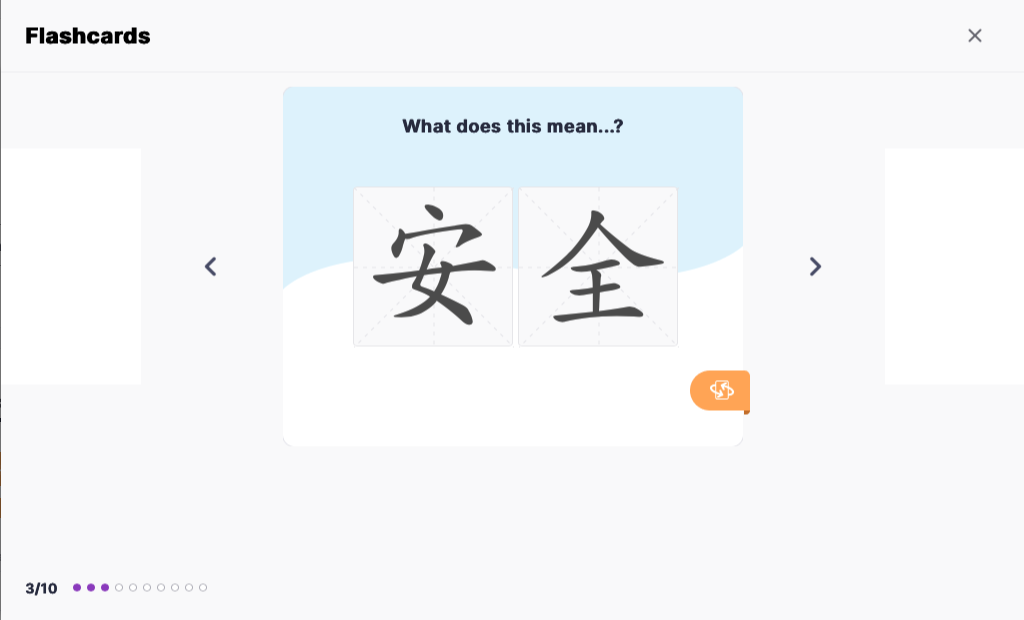
The syllabus provides level-specific character requirements to guide learning and test preparation. It distinguishes between characters learners need to recognise and characters they are expected to produce in writing.
The requirements vary by level, so candidates should consult the official syllabus and sample questions for the specific HSK level they plan to take.
Rather than relying only on character recognition through flashcards, learners should also practise using characters in the types of reading and writing tasks included at their level.
Does HSK 3.0 test translation?
Translation is part of the broader nine-level proficiency framework, but it is not a separate section in the published HSK 3.0 written tests for Levels 1–6.
Translation and interpretation appear in the combined HSK Levels 7–9 examination. That advanced examination assesses:
Listening
Reading
Writing
Written translation
Oral interpretation
Speaking
Candidates take one combined examination, and their result determines whether they receive Level 7, Level 8 or Level 9.
Learners preparing for HSK Levels 1–6 therefore do not need to add a separate translation examination to their study plan.
Is there a new official HSK 3.0 syllabus?
Yes.
The new HSK 3.0 examination syllabus was released in November 2025. The Chinese Test Service website now provides:
The HSK 3.0 examination syllabus
Official sample questions for Levels 1–6
Corresponding speaking-test samples
HSK 3.0 competency descriptions
The new syllabus includes more than a vocabulary list. It specifies:
Communicative abilities
Topics and tasks
Vocabulary
Characters for recognition
Characters for writing
Grammar
Test structure
Learners should use the syllabus for their selected level rather than trying to study the full nine-level standard.
Are there new HSK 3.0 books?
New HSK Course
Yes. A new official preparation series called New HSK Course has been developed for HSK 3.0.
The series is authorised by the Center for Language Education and Cooperation and Chinese Testing International and is published by Foreign Language Teaching and Research Press.
The planned series contains 23 volumes:
Levels 1–6: a main textbook and practice book for each level
Levels 7–9: separate skill books for areas including listening, speaking, reading and writing
New HSK Course 1 was officially published in January 2026. It contains 15 lessons and covers the 300-word Level 1 syllabus with additional supporting vocabulary. New HSK Course 2 and New HSK Course 3 have also been published. The remaining levels will be introduced progressively during 2026, so candidates should check which levels and language editions are currently available before purchasing.
Should you replace your existing HSK books?
Use current-format materials when your upcoming examination follows the existing HSK format.
Use the New HSK Course or another resource explicitly aligned with the November 2025 HSK 3.0 syllabus when your examination is confirmed as HSK 3.0.
The older HSK Standard Course series remains useful for general Chinese study, but its vocabulary sequence and test practice were designed for the existing HSK format. It should not be your only source when preparing for an HSK 3.0 examination.
Are official HSK 3.0 mock tests available?
Official sample questions have been released, but sample questions are not the same as completing a full timed examination.
HSK Mock provides online HSK 3.0 mock tests across Levels 1–9. Learners can practise the relevant section order, question types and timing before taking an HSK 3.0 examination.
Choose Your HSK 3.0 LevelA useful preparation sequence is:
Confirm which HSK format you will take.
Download the correct vocabulary and grammar requirements.
Review the official sample questions.
Complete a full online mock test under timed conditions.
Use the result to identify specific listening, reading, writing or speaking weaknesses.
Complete a final timed mock test before the examination.
Which format should you prepare for?
Prepare for the existing HSK format unless your test centre explicitly tells you otherwise.
Do not assume that an examination uses HSK 3.0 simply because it takes place after July 2026. Check:
The test name shown during registration
Information published by the test centre
Whether a corresponding HSK 3.0 speaking test is required
Whether the centre links to the existing or HSK 3.0 syllabus
Prepare using the new syllabus and HSK 3.0 question structure.
Candidates at Levels 3–6 must also prepare for the corresponding speaking test. Registration opens on 3 August 2026, with separate deadlines for paper-based and computer-based formats.
HSK 3.0 Trial Test on 20 September 2026: Registration and Preparation Guide
Start by identifying your current Chinese level and likely examination date.
Studying the HSK 3.0 vocabulary and communicative tasks can support long-term Chinese development. However, when your examination is approaching, your timed practice must match the exact format you will take.
Prepare for the combined advanced examination. HSK Levels 7–9 were introduced under the nine-level system and are assessed through one examination rather than three separate test papers.
Frequently asked questions
Has HSK 3.0 replaced HSK 2.0?
Not completely. As of 31 July 2026, regular HSK Levels 1–6 examination dates continue to use the existing format. HSK 3.0 is being used for specifically announced test sessions. CTI has not announced a single date on which every regular HSK examination worldwide will change.
Is HSK 3.0 harder?
The vocabulary requirement is higher at Levels 1–6, speaking is included for Levels 3–6 in HSK 3.0 sessions, and some levels contain more substantial writing tasks. The examinations may contain fewer questions, but candidates are expected to demonstrate broader practical language ability.
How many words are required for HSK 3.0?
The approximate cumulative requirements are 300 words for Level 1, 500 for Level 2, 1,000 for Level 3, 2,000 for Level 4, 3,600 for Level 5, 5,400 for Level 6 and approximately 11,000 for the Levels 7–9 band.
Does HSK 3.0 include speaking?
HSK 3.0 Levels 3–6 have corresponding speaking tests. In announced HSK 3.0 sessions, candidates register for the written and speaking components together.
Do I need translation for HSK 3.0 Level 3, 4, 5 or 6?
No separate translation section appears in the published Level 1–6 examination structures. Translation and interpretation are tested in the combined Levels 7–9 examination.
Are existing HSK results still valid?
Yes. Existing HSK score reports remain valid for two years from the examination date. The introduction of HSK 3.0 does not cancel a valid HSK result issued under the existing format.
Prepare for the test you will actually take
The most important step is not choosing between two names. It is confirming the exact test format attached to your examination date and test centre.
Use existing HSK materials for a regular HSK 2026 examination. Use the new vocabulary, sample questions, speaking requirements and HSK 3.0 mock tests when your registration specifically identifies HSK 3.0.
Take an HSK Mock Test
